What Is an OC? Original Characters Explained
What does OC mean? A plain-English guide to original characters — what they are, how they differ from fan characters, and how to make your first one for free.
Posted by
 Harpy Hare OC Maker Team
Related reading
Reverse Engineer Anything (REA): What It Is & How to Use It
REA (Reverse Engineer Anything) is an open-source tool that lets AI agents like Claude Code inspect any app without source code. Setup, use cases, FAQ.
PhotoCraft Download — Free Photoshop Alternative (2026)
Download PhotoCraft free for Windows, macOS and Linux — an open-source image editor with native PSD support. Install guide, Photoshop comparison, FAQ.
Best OC Makers: 100+ Free OC Makers Ranked (2026)
The giant list of free OC makers — ranked top 10 picks plus every fandom, species and style maker we ship. AI-generated original characters, no sign-up.
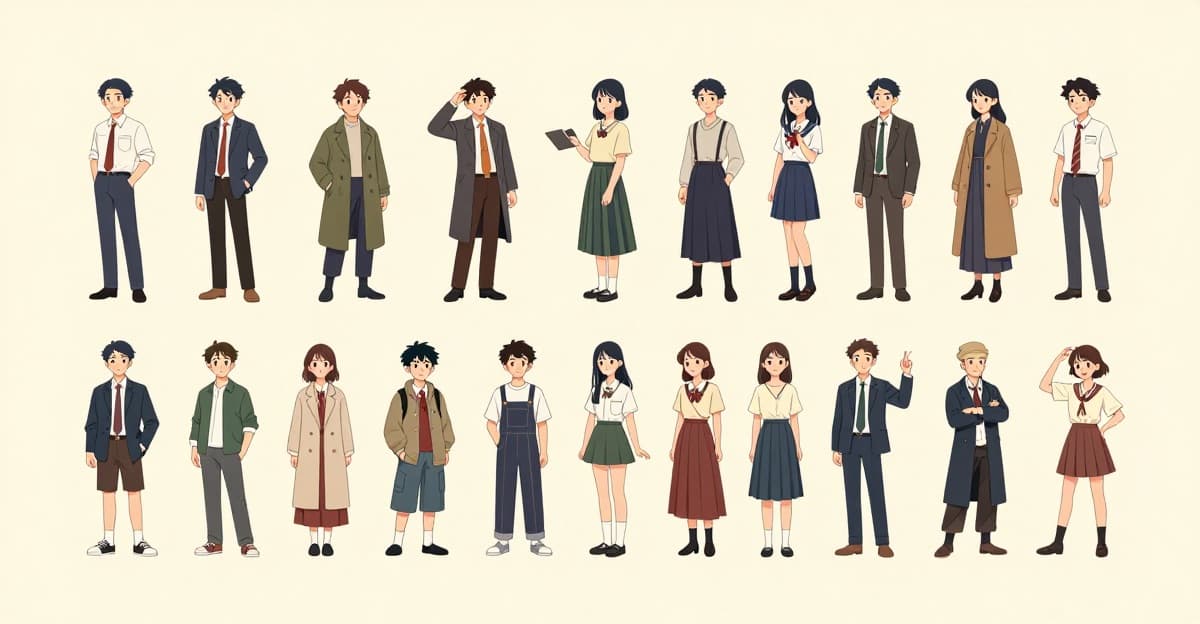
What does OC mean?
OC stands for original character — a fictional character that you invent yourself, rather than one borrowed from an existing series. Your OC has their own name, design, personality, and backstory: a moon-hopping hare courier with a cracked lantern, a barn-owl harpy who guards a flooded library, a nine-tailed fox running a noodle stand. If you made them up, they are your OC.
The term comes from fandom and art communities, where it is used to distinguish invented characters from canon characters — the official ones created by a show, game, or book.
OC vs fan character: what is the difference?
People often blur these, but there is a useful distinction:
- An OC is fully yours: design, personality, and world. It can exist outside any existing franchise.
- A fan character is an OC placed inside someone else's world — a wolf OC who lives in the Warriors universe, or a super-powered student in My Hero Academia. The character is original; the setting is not.
Most OCs live somewhere on this spectrum, and that is fine. The important thing for designers is the same either way: the character should stand on its own silhouette.
Where do OCs live?
Original characters thrive wherever people tell stories together:
- Fandom art spaces — Tumblr, Pinterest, Toyhouse, DeviantArt, where OC reference sheets are a genre of their own.
- Roleplay communities — Discord RP, forum roleplay, D&D campaigns.
- Avatar games — Gacha Life and Gacha Club are essentially OC engines with a huge young audience.
- Indie media — webcomics, visual novels, indie games, and music projects like Yaelokre, whose masked hare-eared characters inspired a whole wave of forest-folk OCs.
What makes a good OC?
After a few million character designs, the pattern is clear. Strong OCs usually have:
- A readable silhouette — you recognize them from the outline alone.
- One signature trait — mismatched wings, a glowing eye, a red scarf. One hook, not five.
- A role, not just a look — guardian, merchant, trickster. A role implies stories.
- A disciplined palette — two or three colors, one accent.
Make your first OC — free
The fastest way to understand OCs is to make one. You can sketch, use a layered avatar maker, or start with AI: pick a species, a role, and a signature trait, and generate a full-body reference in seconds. Try the free AI OC maker — no sign-up required — or draw a random OC idea if you want a starting point handed to you.